
The Best Outdoor TV Setup for the Arizona Sun
How to choose an outdoor TV that survives Arizona’s extreme UV, heat, and haboobs — how many nits you really need, covered vs full sun, and how to avoid overspending.

Outdoor living is central to the Arizona lifestyle — and so is the question of how to put a great TV on the patio without it cooking in the sun. Arizona is genuinely one of the harshest environments in the country for outdoor electronics, so the right setup is about more than picking a bright screen. Here’s how to do it properly. Outdoor entertainment is part of what we design.
The short answer
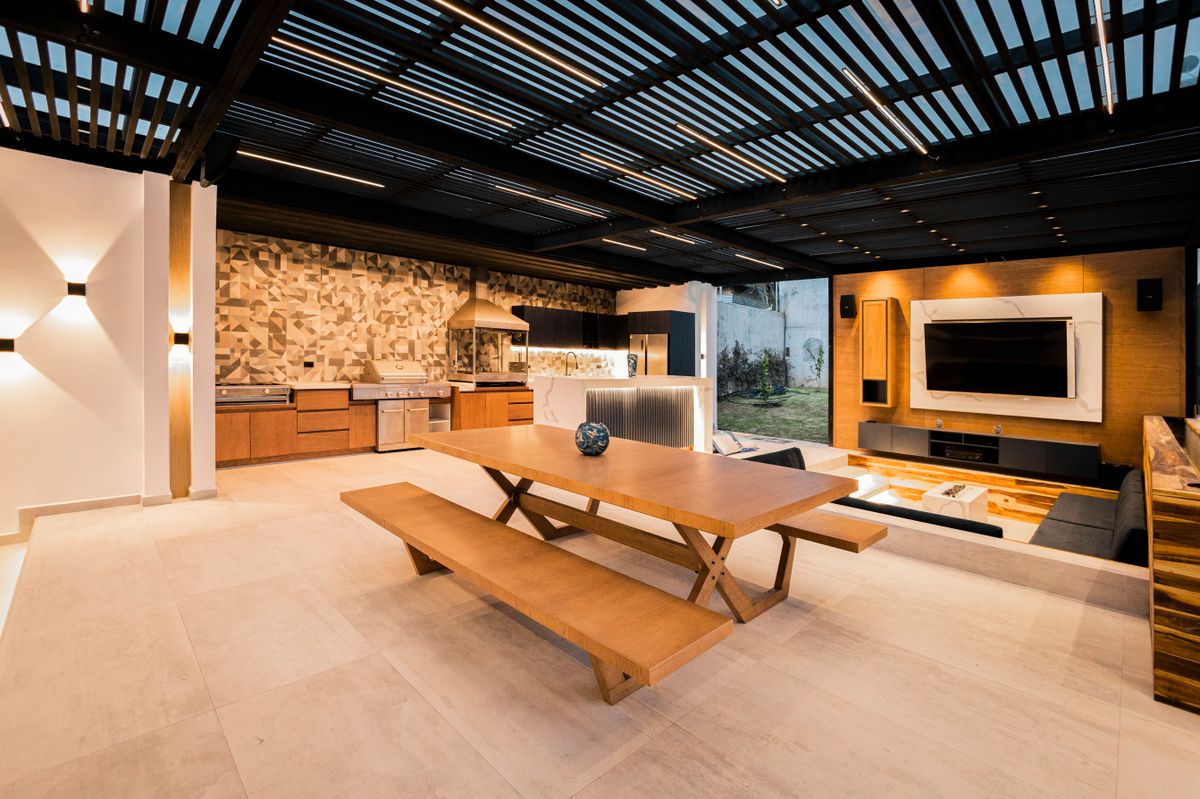
Use a true outdoor TV with a weatherproof, sealed chassis — never an indoor set. Then match brightness to the location: a covered patio needs far fewer nits than a full-sun spot. The goal is a panel bright enough for where it actually lives, in a chassis built to survive Arizona UV, heat, and dust.
Why Arizona is so hard on outdoor TVs
Phoenix records more sunshine than almost any major city on earth — around 3,872 hours a year — and the UV index sits at very-high-to-extreme levels for seven straight months, peaking near 12 in summer. Elevation adds roughly 4–5% more UV per 1,000 feet, and reflective desert terrain bounces additional UV back upward. Add monsoon-season haboobs (dust storms) and big temperature swings, and you have conditions that destroy unsealed, indoor-grade electronics quickly.
How much brightness do you actually need?
Brightness, measured in nits, is what lets a screen beat glare. But more is not automatically better — it should match the install location. A shaded or covered patio is perfectly viewable with a mid-brightness outdoor model, while only a full-sun location needs a flagship high-brightness panel (roughly 2,000 nits or more). The vast majority of residential outdoor TVs in Phoenix go on covered patios, ramadas, or pergolas — not in unobstructed all-day sun.
Full sun vs partial sun vs shade
| Location | Brightness need | Notes |
|---|---|---|
| Covered patio / ramada | Mid (shade-rated outdoor TV) | Most common Arizona install |
| Partial sun / pergola | Higher (partial-sun rated) | Some direct light during the day |
| Full, all-day sun | High (2,000+ nits) | Premium full-sun models only |
| Any location | Sealed outdoor chassis | Non-negotiable in Arizona |
Mounting, shade, and protection
The install matters as much as the panel. Mount in the shadiest practical spot, with ventilation so heat doesn’t build behind the screen, wind-rated hardware, and concealed weather-rated cabling. Just as important, protect the gear feeding the TV — receivers and media devices need to live somewhere cool, and everything should be on proper surge protection for monsoon season. Pair it with outdoor audio and it becomes a true entertainment space.
Don’t overspend on the wrong thing
The classic Arizona mistake is buying the brightest, most expensive panel for a covered patio that never sees direct sun — then skimping on the chassis materials and gasket sealing that actually determine whether the TV survives. Spend on weatherproofing and a brightness level that fits the spot, not on capability you’ll never use. That’s how you get a screen that looks great and lasts.
Outdoor spaces that perform.
Ideal Automation designs outdoor TV and audio built for the Arizona climate — bright enough, sealed, and protected.
Explore audio & videoFrequently asked questions
Can I put a regular TV on my Arizona patio?
No. Indoor TVs aren’t built for the UV, heat, dust, and humidity swings of an Arizona patio and will fail prematurely — and they’re not bright enough to fight glare. Use a purpose-built outdoor TV with a weatherproof, sealed chassis rated for the conditions, even in a covered space.
How many nits do I need for an outdoor TV in Arizona?
It depends on the location. A shaded or covered patio is comfortable with a mid-brightness outdoor TV, while a full-sun installation needs a high-brightness model — roughly 2,000 nits or more — to stay visible. Most residential outdoor TVs in Phoenix go on covered patios, so many homeowners don’t need the brightest (and most expensive) panel.
What’s the most common outdoor TV mistake?
Overspending on brightness while underspending on build quality. People reflexively buy the brightest panel for a covered patio they’ll never use in direct sun, then skimp on the chassis materials and gasket sealing that actually determine whether the TV survives the UV and haboob seasons. Match brightness to the spot, and don’t compromise on weatherproofing.
Where should an outdoor TV be mounted?
Ideally in a shaded or covered spot — a patio, ramada, or pergola — out of direct afternoon sun and driving dust. Proper mounting includes ventilation so heat doesn’t build behind the panel, secure hardware rated for wind, and concealed, weather-rated cabling. A professional install also protects the connected electronics from heat and surges.
Written and reviewed by the team at Ideal Automation — Arizona integrators of custom AV, lighting, and home automation, and specialists in modern Crestron CH5 graphics.