
Control4 vs Crestron: Which Is Right for a Luxury Home? (2026)
A neutral 2026 comparison of Control4 and Crestron — user experience, customization, scalability, install time, and real cost ranges — for luxury Arizona homes.

In luxury home automation, two names come up more than any others: Control4 and Crestron. Both are dealer-installed, both can run an entire home, and both are excellent in the right project. The differences that actually matter are user experience, how customizable the system is, how far it scales, how long it takes to install, and what it costs. This guide compares them neutrally so you can choose with confidence.
The short answer
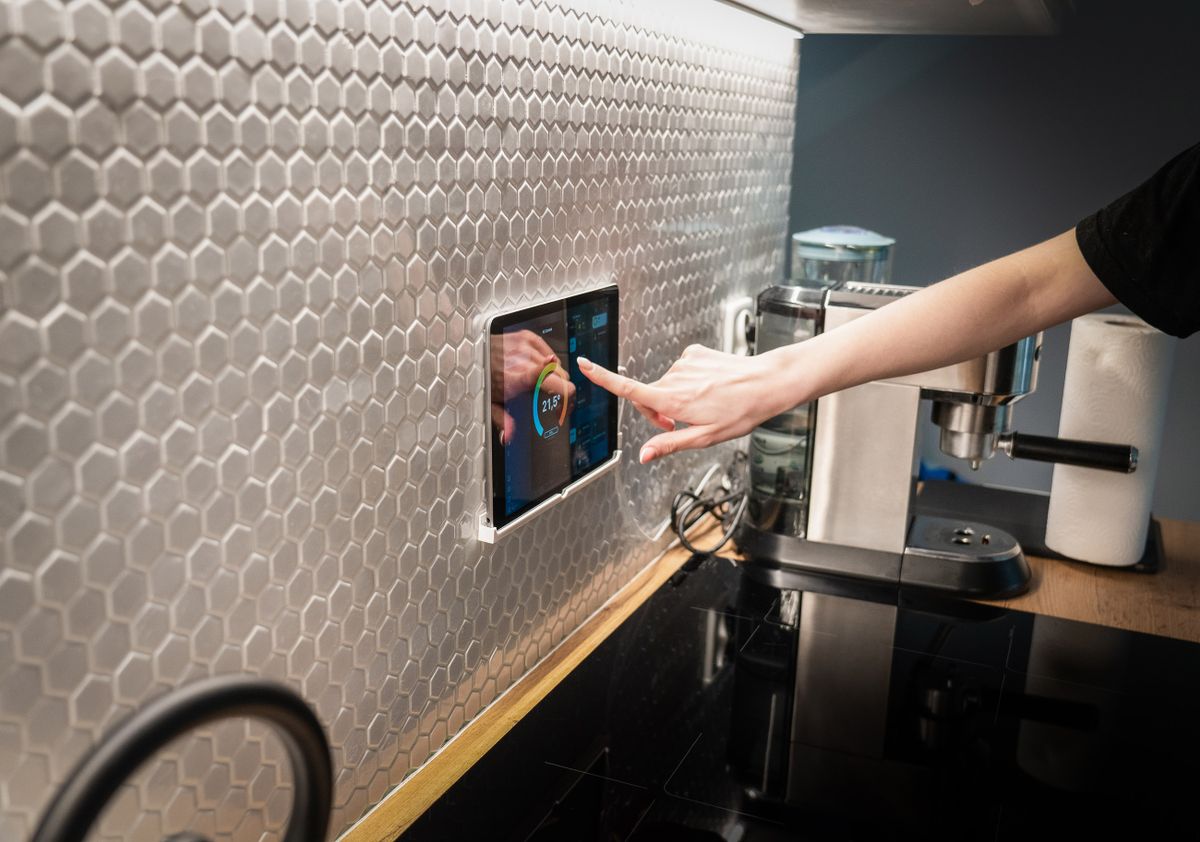
Choose Control4 when you want a polished, standardized system that installs quickly, supports an enormous range of devices, and keeps cost in check. Choose Crestron when you want maximum customization, the ability to scale across a very large estate, and a fully bespoke interface — especially when paired with modern Crestron CH5 graphics. For a wider view that adds Savant to the mix, see our Crestron vs Control4 vs Savant overview.
What Control4 is
Control4 became a leading residential automation platform by prioritizing ease of use and broad compatibility. It ships with a large library of pre-built drivers for thousands of third-party devices — TVs, receivers, locks, thermostats, Sonos, and more — which shortens installation and reduces custom programming. The interface is consistent and familiar across touch panels and the mobile app, so every family member can pick it up quickly.
What Crestron is
Crestron has been building control systems since the 1970s and is engineered to scale almost without limit — large estates, multiple equipment racks, even multiple buildings. It is the default in boardrooms, hospitality, and the most demanding residential projects. Its defining trait is depth: nearly anything can be customized, integrated, and automated, which is exactly why it dominates at the top of the market.
User experience: the old knock on Crestron (and why it’s outdated)
The traditional criticism of Crestron was that its power came at the cost of a more complex, programmer-driven interface, while Control4 felt more turnkey. That gap has closed. With Crestron CH5 (Crestron HTML5), an integrator can build a fully custom, modern, app-grade interface — connected to live data through APIs — that is every bit as clean as a standardized platform, and tailored exactly to the home. Most dealers avoid CH5 because it takes development effort; Ideal Automation builds it in-house. (More on the framework itself in CH5 vs Crestron Home.)
Customization and scale
This is Crestron’s clearest advantage. It is modular and custom-coded, so it adapts to unusual layouts, complex HVAC and shading, and large multi-zone systems without hitting a ceiling. Control4 is also expandable, but at a certain size or complexity you may run into more custom-coding or performance constraints. For a 4–6 room home, both are more than capable; for a sprawling estate with 20+ AV zones, Crestron’s headroom matters.
Installation time and reliability
Because Control4 leans on pre-built drivers and a standardized UI, its installations often finish meaningfully faster than an equivalent Crestron build — a real advantage when timelines and carrying costs matter. Both platforms are highly reliable when properly designed and commissioned. Reliability has far more to do with the quality of the integrator, the network, and the underlying wiring than with the badge on the processor.
What each costs
Brand matters less than scope, but the platforms do sit at different price points. Crestron hardware is generally more expensive — a Crestron touch screen can cost several times a comparable Control4 panel — and its programming requires more specialized labor. As a rough guide, a comprehensive Control4 home commonly lands in the low-to-mid six figures, while a comparable whole-home Crestron system frequently starts higher and scales into the high six figures or beyond on large estates. A “main living areas first” approach delivers most of the daily experience at a fraction of full whole-home cost. For detail, see our Crestron cost guide.
Control4 vs Crestron at a glance
| Control4 | Crestron | |
|---|---|---|
| Best for | Mainstream-to-upscale & luxury homes | Large estates + commercial-grade projects |
| User experience | Standardized, familiar | Fully custom (CH5) — anything you want |
| Customization | Moderate | Highest |
| Scalability | Expandable (residential) | Near-unlimited (room → building) |
| Device support | Very broad, driver-based | Very broad, often custom-coded |
| Install speed | Faster (pre-built drivers) | Slower — faster with in-house CH5 |
| Relative cost | Lower | Premium |
Which should you choose?
- Start with scale. A few smart rooms and a Control4 system is often ideal; a large multi-zone estate leans Crestron.
- Decide how custom the interface must be. If a fully bespoke, branded, data-driven UI matters, Crestron CH5 is hard to beat.
- Weigh timeline and budget. Control4 typically installs faster and costs less; Crestron trades that for ceiling-free flexibility.
- Confirm device compatibility for gear you already own or plan to buy.
- Choose the integrator as carefully as the platform — get an itemized, tiered proposal and compare scope, not just price.
Want Crestron power with a modern interface?
Ideal Automation builds fully-custom Crestron CH5 graphics — the polish of a turnkey platform with the depth of Crestron.
Explore Crestron CH5Frequently asked questions
Is Crestron better than Control4?
Neither is universally “better.” Crestron is more powerful and customizable and scales further, which makes it the stronger choice for large estates and commercial-grade projects. Control4 installs faster, supports a very broad range of third-party devices, and costs less, which makes it a great fit for many luxury homes. The right answer depends on project scale and how custom you want the experience.
How much more does Crestron cost than Control4?
Crestron hardware generally runs higher — a Crestron touch screen can cost several times a comparable Control4 panel — and Crestron programming demands more specialized labor. As a rough guide, a full Control4 home often lands in the low-to-mid six figures, while a comparable whole-home Crestron system frequently starts higher and scales into the high six figures or beyond on large estates.
Does Control4 install faster than Crestron?
Typically yes. Control4 relies on a large library of pre-built drivers and a standardized interface, so installations often finish meaningfully faster than an equivalent custom Crestron deployment. Crestron’s flexibility traditionally meant more programming time — though modern in-house CH5 development narrows that gap considerably.
Can I mix Control4 and Crestron in one home?
In practice a home standardizes on one control platform as the “brain,” because each wants to own the user experience. Individual subsystems (lighting, audio, shades) from other manufacturers are routinely integrated into whichever platform you choose. A good integrator will help you pick one control standard and integrate the best subsystem hardware around it.
Written and reviewed by the team at Ideal Automation — Arizona integrators of custom AV, lighting, and home automation, and specialists in modern Crestron CH5 graphics.